

Olive Oil Myths and Facts
1. MYTH: Olive oil should not be used for cooking because of its low smoke point.
FACT: Olive oil is excellent for cooking and can have a high smoke point, comparable to oils such as canola, rice bran and high-oleic peanut. Olive oil smoke points range from 347°F (175°C) to 464°F to (240°C), depending on the grade, quality and freshness (1, 2). Good quality extra virgin olive oil has excellent cooking properties thanks to natural antioxidants that are resistant to heat, thereby preventing the production of harmful compounds when heated (1 – 7). Moreover, the healthy phenols and mono-unsaturated fats from extra virgin olive oil can transfer into cooked food (3, 8). Vegetables cooked in extra virgin olive oil may contain more antioxidants compared to raw vegetables or boiling vegetables in water (3). Stir-frying with extra virgin olive oil conserves almost all of the vitamin C in broccoli, while stir-frying with peanut oil, soybean oil, safflower oil, and refined olive oil did not – so feel free to use olive oil in a wok! (9).
2. MYTH: You would not like olive oil because you don’t enjoy the taste of olives.
FACT: Olive oil is not made the same way as table olives and therefore does not have a similar taste. Table olives are processed with salt, brine and other debittering methods, and often taste salty, bitter and earthy. Fresh olive oil, on the other hand, is minimally processed like juice and should have a fruity flavor without the earthiness that can come from fermentation.
3. MYTH: “Light” olive oil is lower in calories than other olive oil.
FACT: All oils have the same number of calories, nine calories per gram, which is 120 calories per tablespoon. “Light” refers to olive oils that have been through a refining process that have removed most of the color, flavors and aromas.
4. MYTH: “Extra virgin” olive oil is the only healthy type of olive oil.
FACT: All olive oil grades have healthy properties. While “pure” and “light” olive oil have gone through a refining process that removes much of the color, flavor, aroma, and antioxidants, these oils still contain healthy mono-unsaturated fats, squalene and tocopherols. Studies show that mono-unsaturated fats have a positive role in the prevention of cardiovascular disease (10), squalene is an antioxidant that may reduce cancer-risk (11 – 13) and tocopherols, known as vitamin E, are antioxidants that slow down lipid oxidation (14). “Extra virgin” olive oil has more healthy properties than refined olive oils because extra virgin is minimally processed, thereby retaining more of the olive’s healthful phenolics and antioxidants (15, 16) and their protective effects against cancer and coronary heart disease (13, 17 – 22).
5. MYTH: Most extra virgin olive oil is “fake.”
FACT: Olive oil labeled as “extra virgin” most likely is olive oil, but it may not meet extra virgin standards. In 2010 the UC Davis Olive Center found that 69 percent of imported “extra virgin” olive oil purchased from supermarkets in three California metropolitan areas did not meet “extra virgin” chemistry and/or sensory standards (23). Blogs, social media posts and news stories frequently misinterpreted the findings by claiming that most oils were “fake.” While there is evidence that adulterated olive oil is in the marketplace (24), the 2010 UC Davis study did not find evidence that samples were adulterated with non-olive oils. Olive oil quality can vary by season and lot – the 2010 results would not necessarily reflect the quality currently available.
6. MYTH: You can tell a good extra virgin olive oil by its color or packaging.
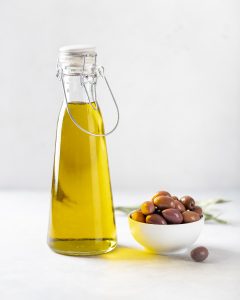
FACT: No, you can’t. Color is impacted by many factors other than quality, including variety, region, climate, fruit maturity and processing. While some packaging is better at preserving oil quality (25), the quality of the package will not necessarily correspond to the quality of the oil. Dark glass, tinplate/stainless steel cans, and bag-in-box are the best at protecting the oil from light or air, while clear plastic bottles are the least protective. Instead of paying too much attention to the color or the packaging, look for a harvest date on the package, which gives information about the freshness of the oil.
7. MYTH: Olive oil gets better with age.
FACT: With enough time all olive oils, even the highest quality oils, will become rancid from oxidation. The bright flavors of fresh extra virgin olive oil will diminish with time, although some consumers may prefer the taste of a milder oil. The health benefits from antioxidants in olive oil also diminish with time (26), depleting themselves as they ward off rancidity. Those seeking fresh oil can find olive oil produced year-round: February-March in Brazil, April-June throughout the Southern Hemisphere, August-September in the California desert, and October-January throughout the Northern Hemisphere.
8. MYTH: Buying a large container of olive oil is smart shopping.
FACT: Buying a size of container that can be consumed within weeks or a few months after opening is smart shopping to deliver the maximum amount of freshness and quality from the oil. As soon as the bottle is open, more oxygen gets into the bottle causing the oil to oxidize at a faster rate compared to the oil in a close bottle. To keep the oil fresh longer, it’s best to store it in a cool and dark place.
9. MYTH: Storing olive oil in the fridge or freezer is harmful.
FACT: Research has shown that extra virgin olive oil has a longer shelf life when stored at 59°F (15°C) compared to 77°F (25°C) (27). Oil stored at a freezer temperature of -4°F (20°C) maintained higher quality than oil stored at a refrigerator temperature of 39°F (4°C) (28). It’s normal for the oil to get cloudy or to solidify in cold temperatures due to the waxes that are naturally present in olives and does not affect oil quality or safety.
10. MYTH: Cloudy oil or sediment in the bottle mean the oil has gone bad.
FACT: Cloudiness or sediment are not indicators that an oil has gone bad, although they may hasten the development of off-flavors. For example, olio nuovo (i.e., new oil) is usually bottled unfiltered, and many consumers value the oil’s vibrant flavor, grassy aroma and high phenolics. One caveat is that excessive moisture and sediments in the oil would give it a relatively short shelf life of just a few months (29). Some producers filter out the waxes, sediment and water droplets to enhance clarity and prevent off-flavors from developing.